


Meniscal Root Tears
https://pubmed.ncbi.nlm.nih.gov/35755791/
Diagnosis, Consequences and Treatment
Evidence Base
Banovetz MT, Roethke LC, Rodriguez AN, LaPrade RF. Meniscal Root Tears: A Decade of Research on their Relevant Anatomy, Biomechanics, Diagnosis, and Treatment. Arch Bone Jt Surg. 2022 May;10(5):366-380. doi: 10.22038/ABJS.2021.60054.2958. PMID: 35755791; PMCID: PMC9194705.
Key Points
- Meniscal root tears are serious injuries that can behave like complete loss of the meniscus
- They significantly increase contact pressures in the knee, similar to having the meniscus removed
- Untreated root tears can rapidly lead to cartilage damage and arthritis
- Repair of the root can restore more normal knee mechanics
- Early diagnosis and treatment are important for the best outcomes
What is a meniscal root tear?
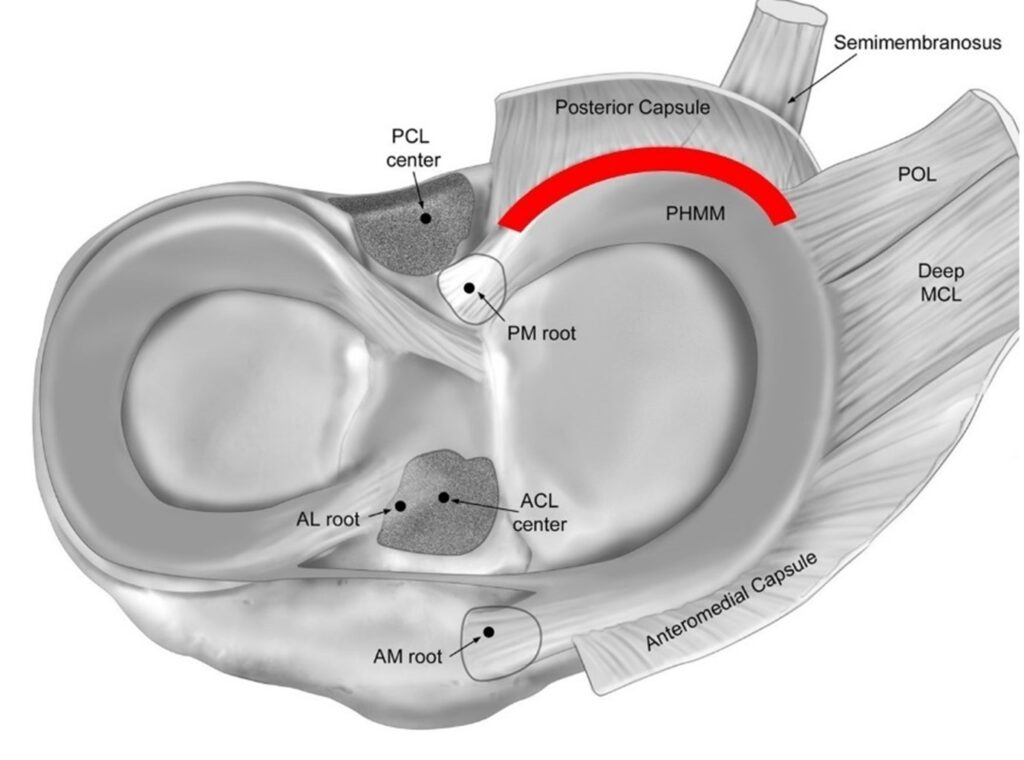
The meniscus is anchored to the bone at its front and back attachments, known as the roots.
A root tear occurs when this attachment is disrupted.
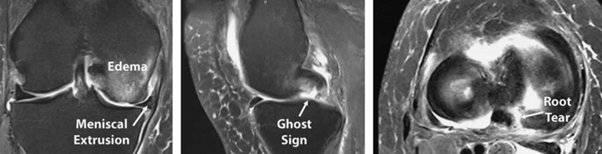
This means the meniscus can no longer function properly, even if the rest of it looks intact.
Why is this important?
When the root is torn:
- The meniscus is no longer able to distribute load effectively
- Contact pressures in the knee increase significantly
- This is biomechanically similar to removing the meniscus completely
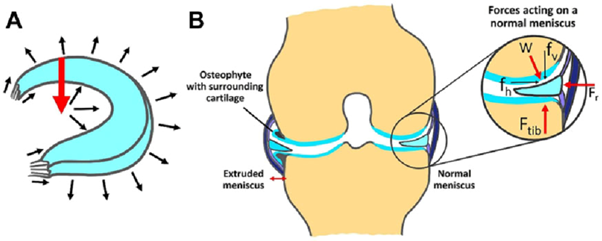
This can lead to:
- Rapid cartilage wear
- Progression to arthritis
- Ongoing pain and swelling
What causes a root tear?
Root tears can occur in two main ways:
- Traumatic injuries, often in younger patients during sport
- Degenerative tears, more common in middle-aged patients
Degenerative root tears are often associated with:
- Sudden onset pain
- A “pop” or sharp pain without major trauma
- Early arthritis changes
What did the study show?
This paper brings together the current understanding of meniscal root tears.
It highlights that:
- Root tears significantly alter knee biomechanics
- They are frequently underdiagnosed
- MRI can help identify the injury, but careful assessment is needed
Treatment options
Non-operative treatment
- May be considered in low-demand patients
- Does not restore normal knee mechanics
- Often associated with progression of arthritis
Meniscal root repair
- Aims to reattach the meniscus to the bone
- Can restore more normal load distribution
- Best outcomes seen in patients with:
- minimal arthritis
- good alignment
- early diagnosis
Other options
In more advanced cases, additional procedures may be required, such as:
- Osteotomy to correct alignment
- Joint replacement in severe arthritis
What does this mean for you?
Meniscal root tears are an important and sometimes overlooked cause of knee pain.
Key messages:
- They are more serious than a standard meniscus tear
- Early diagnosis can change treatment and outcomes
- Repair can help preserve the knee and delay arthritis in suitable patients
Key considerations
- Not all root tears are suitable for repair
- Outcomes depend on cartilage health and alignment
- Early specialist assessment is important